
Hanoi’s Public Venture Capital Fund to Launch December 20

Truong Viet Dung, Vice Chairman of Hanoi People’s Committee, delivers the opening remarks on December 13. Photo: Vu Hieu
In an exciting announcement made at the National Policy Forum on International Investment Cooperation for Innovation and Startups on December 13, Truong Viet Dung, the Vice Chairman of the Hanoi People’s Committee, revealed that the city’s long-awaited public venture capital fund will officially launch on December 20.
This initiative comes with an impressive initial budget of 600 billion VND (approximately 24 million USD), with plans to allocate up to 2,000 billion VND (around 80 million USD) to venture capital investments in the future. This significant financial backing underscores Hanoi’s ambition to become a thriving hub for innovation and technology.
Truong emphasized, “This is a major shift in perception and thinking. We are embracing venture capital and risk, and the government is joining hands with private investors.” His remarks highlight a pivotal change in mindset, where the government recognizes its role in fostering an environment conducive to innovation.
Underlying the framework for this public venture fund is a crucial principle: while the state will play a facilitating role, it does not intend to replace market mechanisms. Instead, the public venture fund aims to share initial risks, working collaboratively with private investors. This public-private co-investment strategy will enable the government to act as a catalyst, attracting additional resources from the broader community.
One of the key aspects of this fund is its willingness to accept higher-risk portfolios, particularly in areas like innovation, core technologies, and green technology. Truong asserted the importance of diversifying investment and embracing innovative solutions to tackle pressing challenges.
In outlining the goals for the upcoming year, Truong stated that to achieve the city’s ambitious growth target of 11%, revitalizing traditional growth drivers such as public investment, exports, and consumption is essential. However, he emphasized that an equal focus on science, technology, innovation, and digital transformation is vital for sustainable development.
Drawing lessons from successful international models like that of the United States, he pointed out that innovation thrives in environments that allow for experimentation and provide structured risk management mechanisms. Venture capital funds are central to this dynamic, having enabled many countries to cultivate globally competitive tech companies.
Moving forward, Hanoi aims to collaborate closely with national ministries to implement new mechanisms, improve its investment landscape, and enhance local capacity for execution. The city’s leadership is eager to engage with both domestic and international businesses, inviting them to explore the opportunities Hanoi has to offer. “The government is always ready to foster innovation and partner long-term to turn creative ideas into real societal value,” Truong stated.
Every City Should Have Its Own Startup ‘Gazelles’
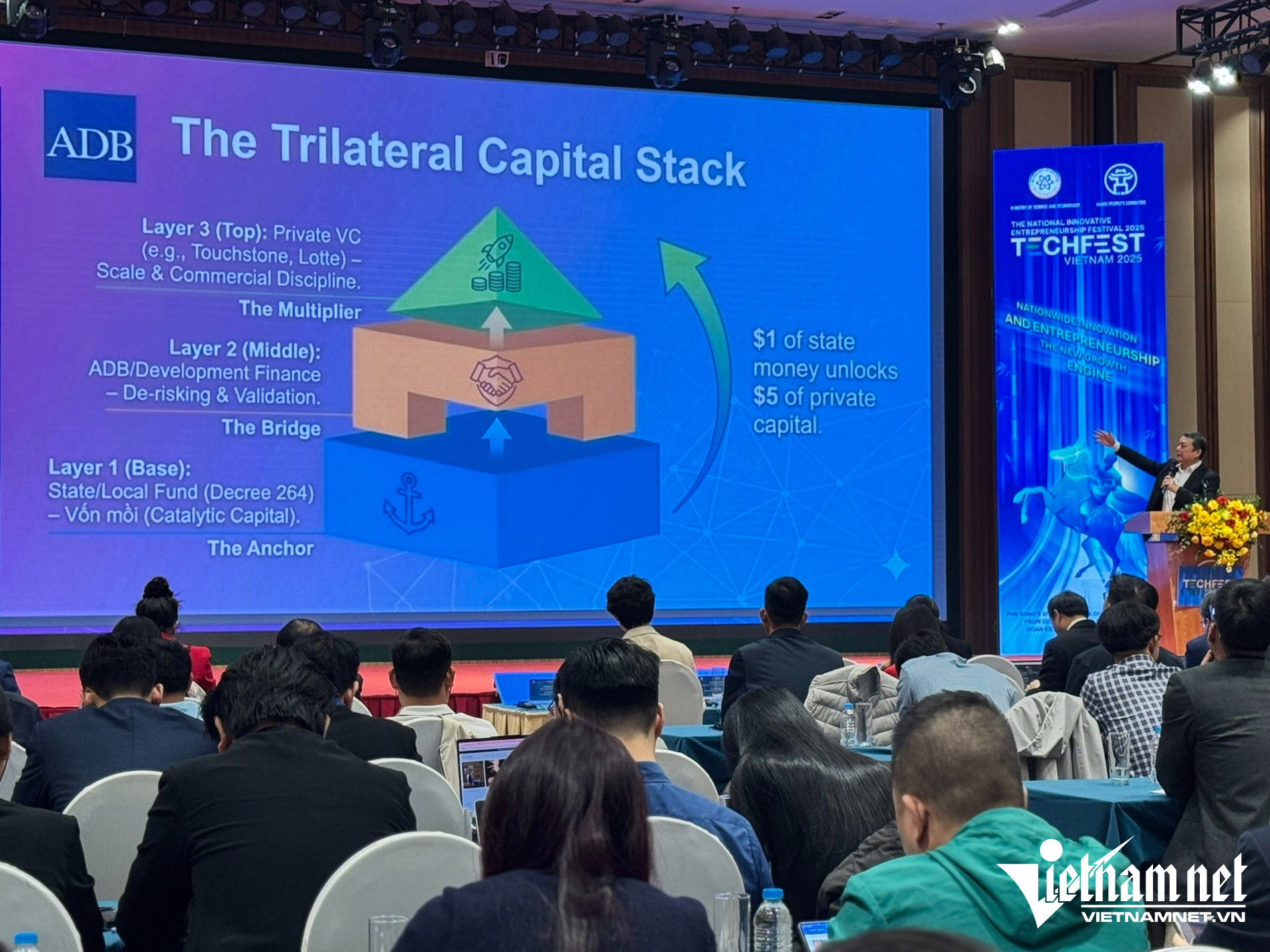
During the forum, experts from investment funds, banks, and international organizations provided insights into the challenges and opportunities in building a collaborative venture funding landscape for innovative startups. Their discussions focused on addressing the dual transition and smart urban development necessary for Vietnam’s growth.
Speakers highlighted Vietnam’s proactive efforts to foster a robust startup ecosystem, underscoring the importance of institutional reforms and the government’s commitment to venture capital. Nevertheless, they also stressed the need for effective filtering mechanisms to ensure quality investments while facilitating foreign investors’ access to the domestic market.
David Lewis from Energy Capital Vietnam (ECV) expressed optimism about Vietnam’s future: “Within just 20 years, Vietnam will no longer be asking ‘how to attract capital,’ but instead, ‘how to govern capital more effectively.’” This forward-looking vision captures a potential trajectory of evolving from attracting investment to creating a sustainable investment environment.
Samuel Ang, a senior expert at the Asian Development Bank (ADB), introduced the concept of “gazelles” – high-growth startups that may comprise only 1% of all companies yet are responsible for 40% of new job creation. Ang proposed that localities compile lists of their own gazelle companies, particularly in technology sectors that can deliver scalable solutions to pressing infrastructure challenges.
As these startups develop, banks can play a pivotal role in validating them, thus attracting further venture capital to these promising ventures. Ang emphasized that startups should target localized issues, such as traffic and waste management, making them relevant to Hanoi’s context.
Juhern Kim, the Vietnam Country Representative at the Global Green Growth Institute (GGGI), outlined the importance of focusing investments in green and climate tech, especially considering Vietnam’s commitment to achieving net-zero emissions by 2050. He proposed strategies involving joint fund models and blended finance to stimulate innovation and co-finance projects in this crucial area.
With the launch of the public venture capital fund, Hanoi is poised to foster not just individual startups but a thriving innovation ecosystem that seeks sustainable solutions to the challenges of the modern world.