
The Future of Agriculture: Autonomous Drones Are Here
Meet Scout: A Revolutionary Tool for Farmers
American Robotics, an innovative leader in the field of agricultural automation, has recently unveiled its flagship product, Scout. This groundbreaking drone system is designed to revolutionize traditional farming practices by introducing full autonomy into daily scouting missions. Equipped with self-charging and self-managing capabilities, Scout could be the game-changer farmers need as they face increasing pressures to boost food production.
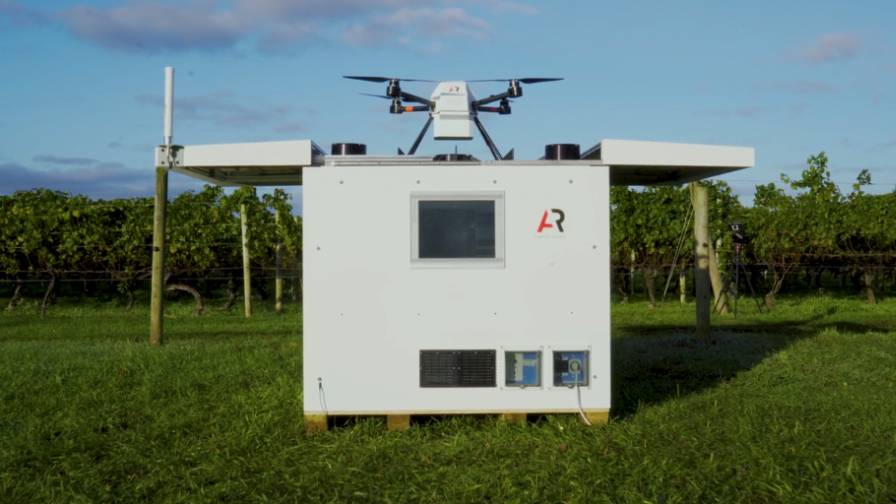
Scout from American Robotics is a self-charging, self-managing drone system capable of autonomously carrying out daily scouting missions.
Challenges Facing Modern Agriculture
Looking ahead, global population estimates suggest that by 2050, there will be approximately 10 billion people on the planet. This increase will necessitate a staggering 70% boost in food production, necessitating new tools for enhanced agricultural efficiency. With arable land diminishing and fewer farmers in the field, the agriculture sector is at a critical juncture.
Traditional scouting methods, including first-generation and consumer-grade drones, have proven inadequate for early plant stress detection. These techniques often consume significant time and resources, hindering farmers’ ability to identify problems before they escalate. In a world where yields must increase, the demand for effective solutions is urgent.
The Technology Behind Scout
Reese Mozer, Co-Founder and CEO of American Robotics, emphasizes that the technology that powers Scout was developed through close collaboration with farmers and agricultural professionals. “The challenges they face are unique in logistics and economics,” he explains. This understanding has led to the creation of a truly practical industrial drone system capable of addressing these needs.
Scout represents a turn-key solution—a complete package that comes equipped with visual and multispectral cameras, along with a weatherproof drone station that manages housing, charging, data processing, and data transfer. Once installed in a field, Scout operates entirely autonomously, requiring no manual intervention from farmers to plan, fly, or manage the drone’s operations.
The Impact on Precision Agriculture
Dr. Ray Asebedo, a Professor of Precision Agriculture at Kansas State University, highlights the immense potential of Scout to transform the landscape of precision farming. One of the most frequent inquiries he receives is whether farmers will be able to deploy a drone that can autonomously survey their entire fields. Current limitations in cost and operational complexity hinder widespread drone usage, often restricting farmers to using them only sporadically.
This infrequency means valuable data, essential for effective crop scouting, is often missed. Scout promises to change that dynamic, enabling farmers and agronomists to obtain high-resolution imagery and data regularly without the need for their presence in the field.
Seamless Data Integration
Farmers no longer need to worry about the intricacies of managing drone operations. The Scout system is designed to provide seamless health reports and analyses delivered directly to farmers, allowing for timely decision-making. This level of automation could pave the way for a new era in agriculture where data-driven insights are readily available without cumbersome manual processes.
This summer, Scout has already made its mark, being deployed across various agricultural locations throughout the United States, demonstrating the practicality and efficiency of modern farming solutions.
The Road Ahead for Agricultural Automation
As agriculture continues to grapple with the twin challenges of productivity and sustainability, solutions like Scout could play a pivotal role. The integration of autonomous technologies into farming practices suggests a future where efficiency increases, and dependency on manual labor diminishes.
The advent of fully autonomous systems could signal a renaissance in farming practices, aiming to not only meet the impending food demands but also ensure that the land is used sustainably—a balance that is increasingly critical in our rapidly changing world.