
Revolutionizing Data Storage: The Rise of Ceramic Nano Memory
In an age where data storage needs are skyrocketing, German startup Cerabyte is stepping forward with a groundbreaking solution that promises to reshape how we archive information. Utilizing a unique ceramic-based technology, Cerabyte claims to enable storage capacities reaching 100 petabytes in compact cartridges, with ambitious plans for 1 exabyte archives using their ceramic tape system. This innovative approach could help meet the ever-growing demand for data storage while addressing sustainability concerns.
Cerabyte’s Ceramic Technology: What Sets It Apart?
Co-founder and CEO Christian Pflaum is set to unveil detailed insights into their ceramic nano-memory technology at the 2023 Storage Developer Conference in Fremont, California, from September 18 to 21. His presentation will highlight the use of inorganic nano layers made from ceramics, which can be as thin as 50-100 atoms. This design promises superior durability against traditional storage threats like fire and flood, paving the way for a more reliable data storage future.
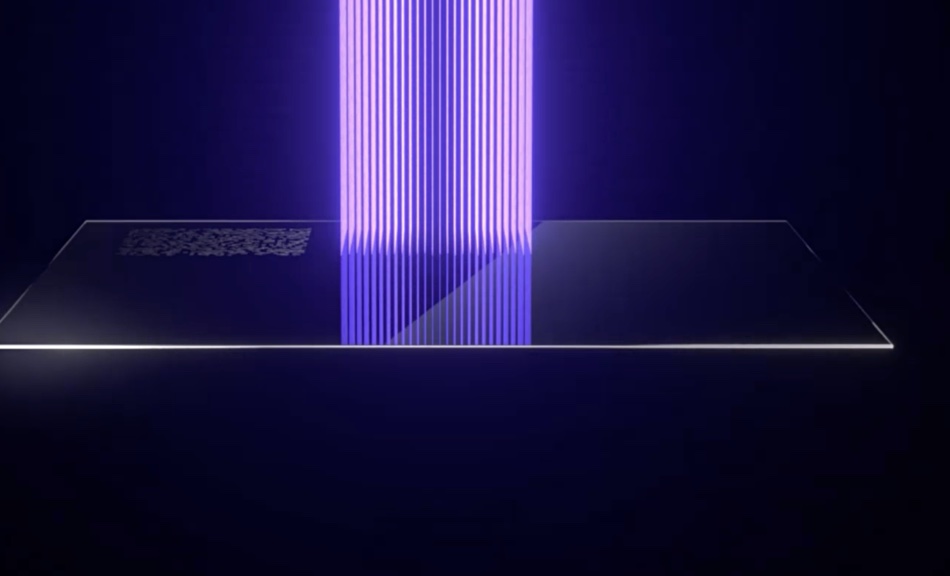
The unique architecture of Cerabyte’s technology allows for data to be written and read using cutting-edge laser or particle beams. The structure resembles QR codes, featuring two-dimensional, machine-readable codes that enable rapid access to information. Such a design not only enhances data retrieval speed but also optimizes storage density.
Impressive Data Density Projections
Cerabyte’s technology is engineered for exceptional volumetric data density. The storage medium consists of glass sheets or thin tapes coated with a ceramic layer, with thicknesses ranging from 100 µm to 5 µm. The roadmap extends from 100 nm to 3 nm bit sizes, equating to data densities ranging from GB/cm² to TB/cm². This scalability transforms the way we perceive storage capabilities, promising a transition into the realm of yottabytes.
By leveraging high-resolution microscopic imaging and electron beam microscopy, the data can be read with unmatched precision, revealing previously unachievable storage depths and densities. The fact that the data carriers are square-shaped, stackable sheets made entirely of ceramic adds to their practicality and efficiency.
Speed and Efficiency: A Game Changer
The potential for high-speed reading and writing is another highlight of Cerabyte’s storage solution. With GBps class read speeds supported by advanced robotics and imaging sensors, the data access time could be reduced to mere seconds. This technological leap could allow datacenters to manage colossal volumes of data with unprecedented efficiency. Notably, Cerabyte claims it can write up to 2,000,000 bits with a single laser pulse, demonstrating the speed and effectiveness of their systems.
Environmental and Economic Considerations
Apart from technological advancements, sustainability is woven deeply into Cerabyte’s ethos. The ceramics used in their storage media are fully recyclable, offering a solution that aligns with modern ecological standards. Additionally, the expected cost structures are designed to undercut existing commercial storage technologies, making this innovative solution not merely a technological marvel but also an economically viable option for businesses facing increasing data demands.
Navigating Technical Challenges
While the technology shows immense promise, it is not without challenges. The claim that data density scales primarily with the substrate’s thickness implies that designing devices capable of accurately reading and writing data at various depths within the media will be complex. However, Cerabyte’s approach of using separately accessible thin sheets could address these challenges effectively, thereby overcoming the pitfalls that have previously derailed innovations like holographic storage.
Industry Collaborations: Building a Network
Cerabyte has made strides in establishing partnerships with major manufacturing players. This strategic collaboration can pave the way for more extensive deployment of their technology, making it more accessible to a broader audience. There’s a vibrant ecosystem waiting to be influenced by this innovation, and Cerabyte’s partnerships could be the catalyst for widespread acceptance of ceramic nano memory.
As industry giants like Spectra Logic ramp up their offerings with high-capacity tape libraries, the need for cutting-edge storage solutions like Cerabyte’s becomes even more evident. The future appears bright for those looking to embrace the next wave of data storage technology.
For those interested in deeper insights into how this technology works, Cerabyte’s website offers a wealth of information, charting the course for a transformative future in data storage.