
Operating Systems Statistics: Trends and Insights for 2025
Operating systems are the backbone of our digital experience, serving as the crucial software layer that facilitates the seamless operation of computers, smartphones, servers, and more. As technology rapidly evolves, so do user preferences and market dynamics, leading to a vibrant landscape of operating systems (OS) worldwide. In this article, we’ll explore the current trends and statistics surrounding various operating systems, as well as their implications for users and developers alike.
Introduction
Operating systems are not just software; they are the platforms that support applications, manage hardware resources, and provide a user-friendly interface for interaction. As of August 2025, a slew of operating systems compete for market dominance, including Windows, macOS, Linux, Android, and iOS. Understanding their usage statistics not only sheds light on user habits and preferences but also informs businesses and developers about which platforms to prioritize.
Editor’s Choice
- According to gs.statcounter.com, Android holds the title as the leading operating system globally with a market share of 44.44%.
- Windows continues to reign supreme in the desktop OS market, boasting a commanding 69.75% share.
- In North America, Windows captures 31.02% of the operating system market, followed closely by iOS at 28.14% and Android at 21.06%.
- Interestingly, Android’s global usage soared to about 72.7% in May 2025.
- During the first quarter of 2025, Android led the way in smartphone shipments, accounting for 76% of units sold.
- Notably, Windows 10 and Windows 11 are the preferred OS versions among computers, with 53.19% still using Windows 10 and 43.22% on Windows 11.
- In a 2024 survey, 59.2% of developers reported using Windows for personal work, while 47.6% indicated they use it as their primary professional environment.
Global Operating System Usage Statistics
Source: procurri.com
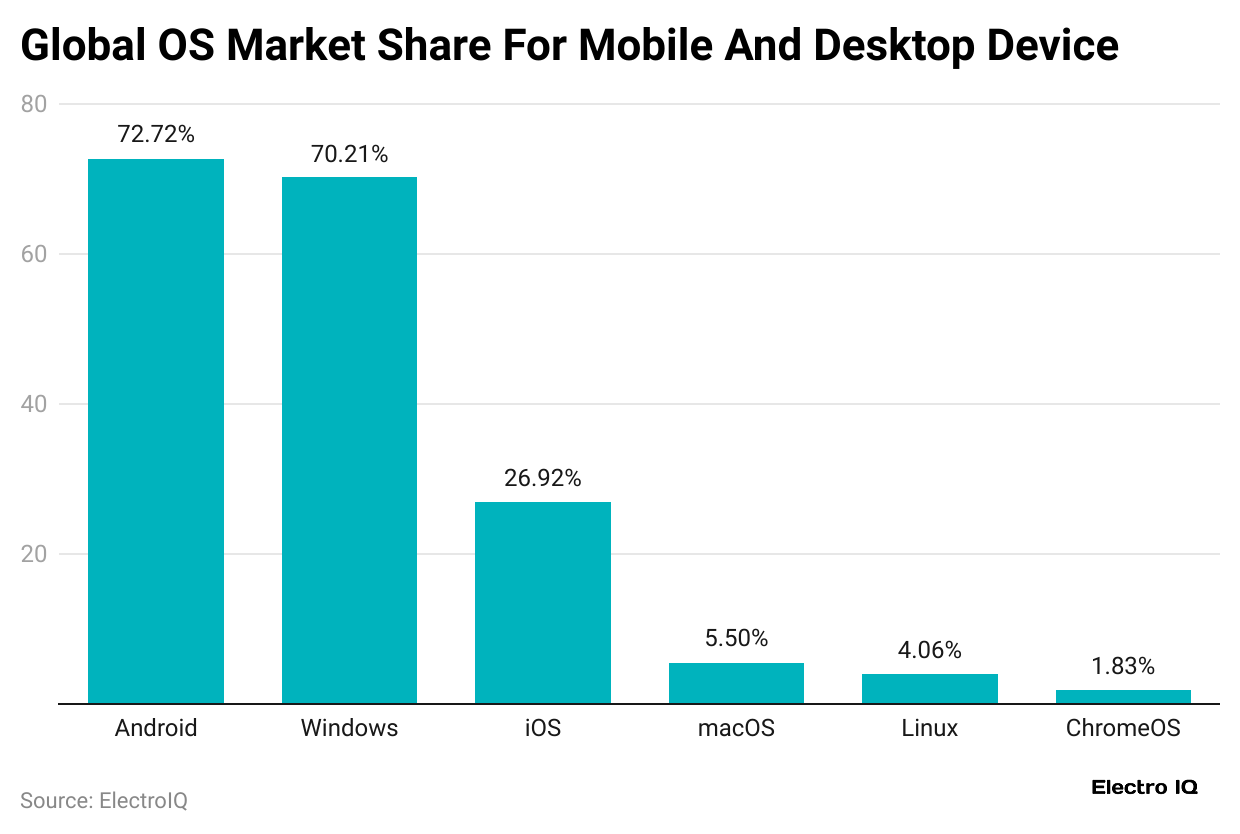
As of May 2025:
- Android dominates global usage at approximately 72.7%.
- Windows holds a substantial share of 70.2%, particularly reinforcing its desktop dominance.
- Apple’s iOS accounts for about 26.9%, while macOS secures about 5.5%.
- Linux and Chrome OS represent 4.1% and 1.8%, respectively.
Leading Mobile and Desktop Operating Systems Statistics by Region
Source: procurri.com
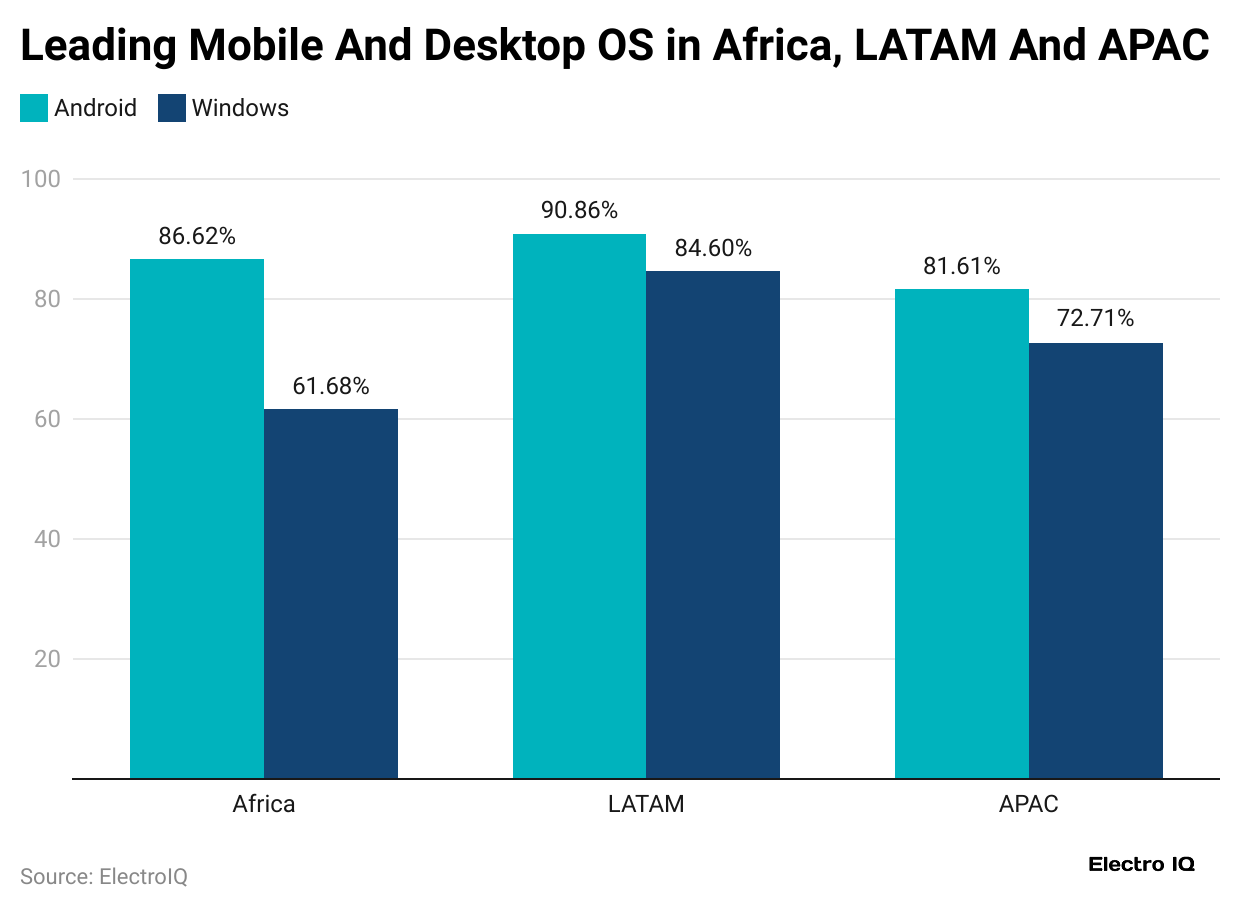
- Africa: Android reigns supreme, with 86.62% market share, while Windows captures 61.68% of desktop usage.
- Latin America: Android’s dominance continues here with 90.86%, and Windows holds 84.60% in the desktop arena.
- Asia Pacific: Android accounts for a robust 81.61%, while Windows maintains a stronghold with 72.71% share among desktop systems.
Operating System Market Share Statistics
Source: statcounter.com
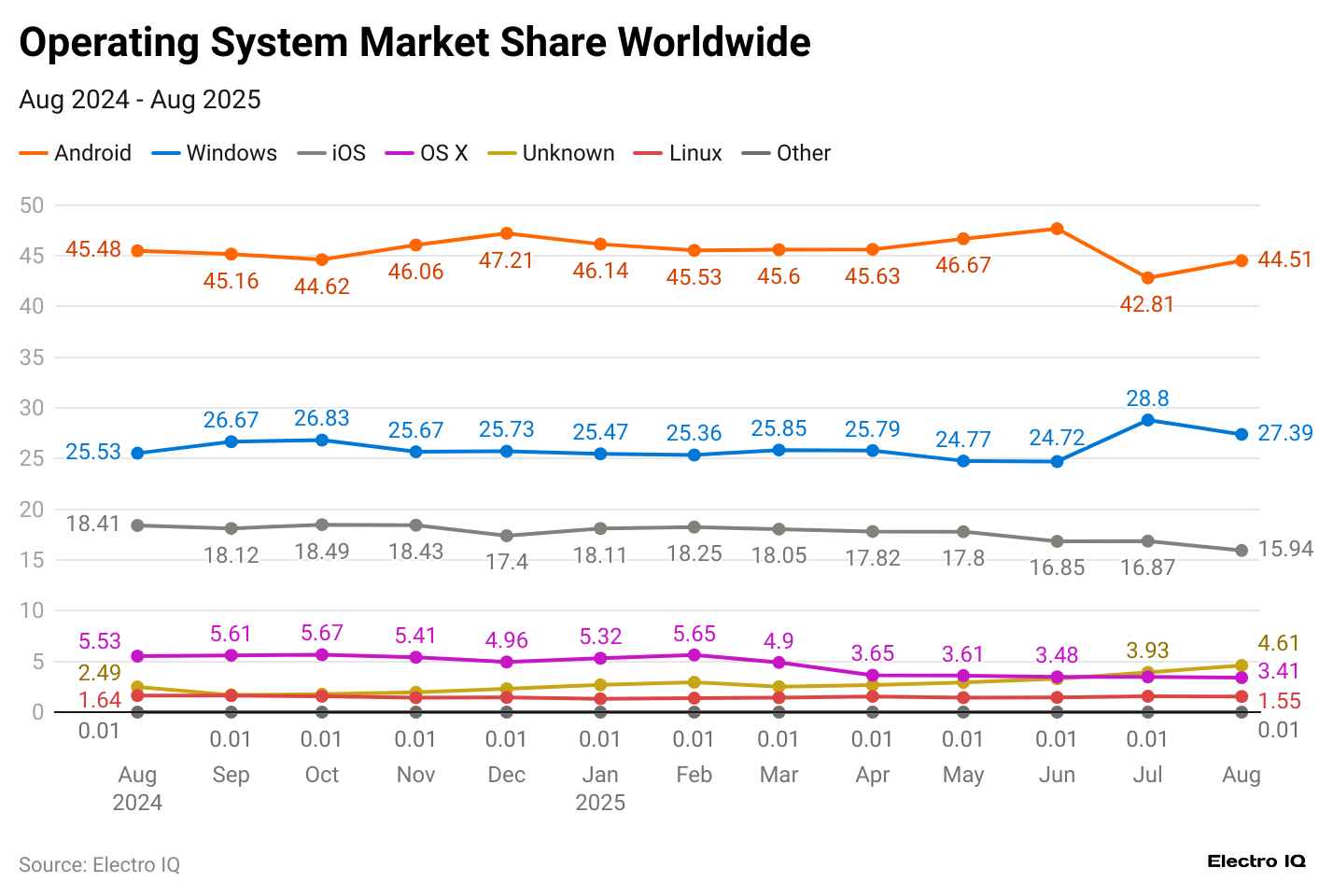
By August 2025:
- Android leads with 44.44% market share.
- Windows trails at 27.45%, followed by iOS at 15.94%.
- Other unidentified operating systems account for about 4.6%.
- macOS and OS X maintain a presence with shares of 1.88% and 3.42%, respectively.
Monthly trends reveal Android’s gradual dominance in user preference over the past year, with fluctuations in Windows usage indicating shifting user needs.
Operating System Market Share by Desktop
Source: statcounter.com
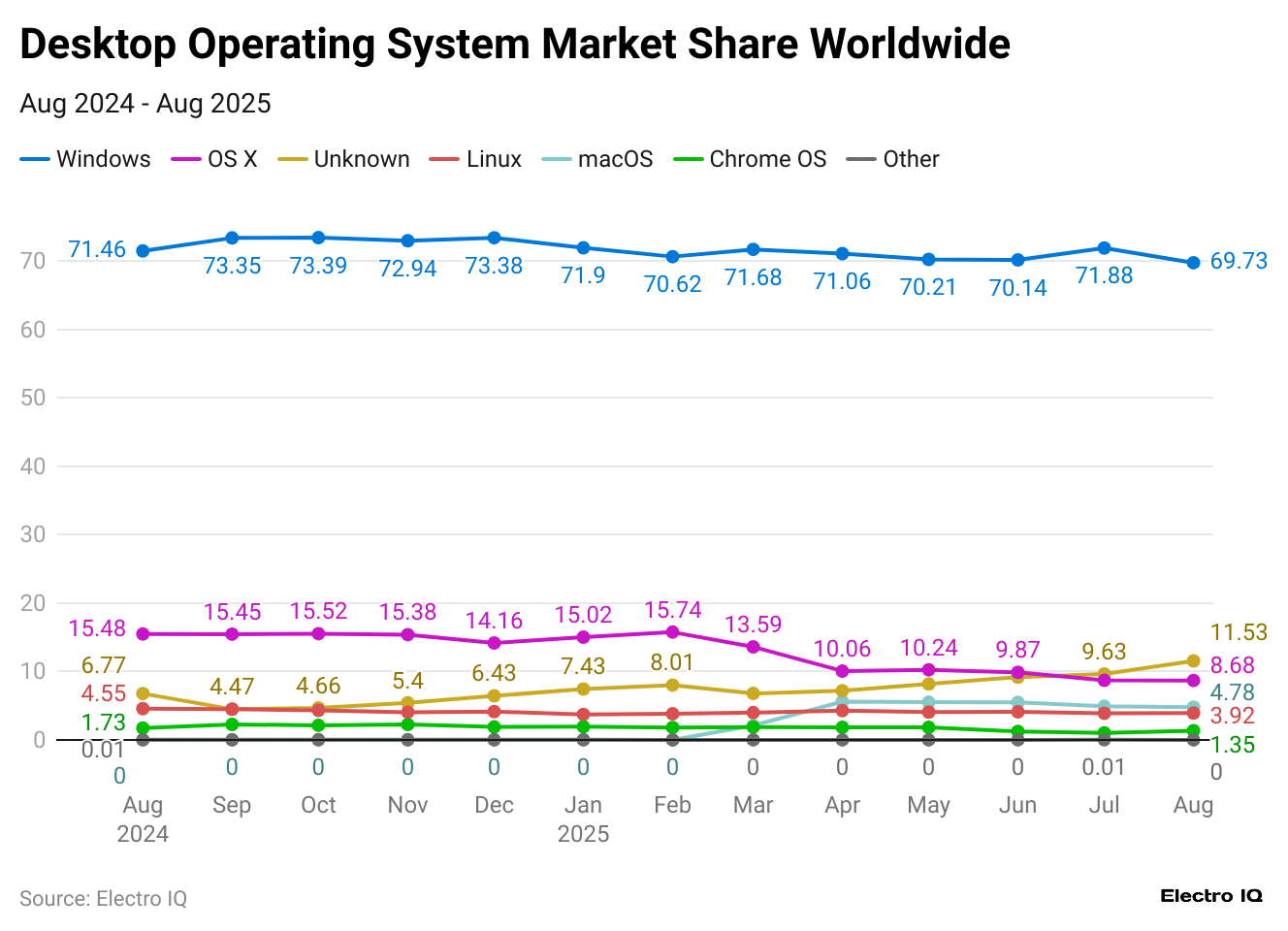
In August 2025:
- Windows dominates the desktop segment with a significant 69.75% market share.
- Systems categorized as “Unknown” account for 11.48%, while OS X and macOS follow at 8.69% and 4.79%.
- Linux remains a niche player with 3.93%, alongside Chrome OS at 1.36%.
Markets by Region
North America
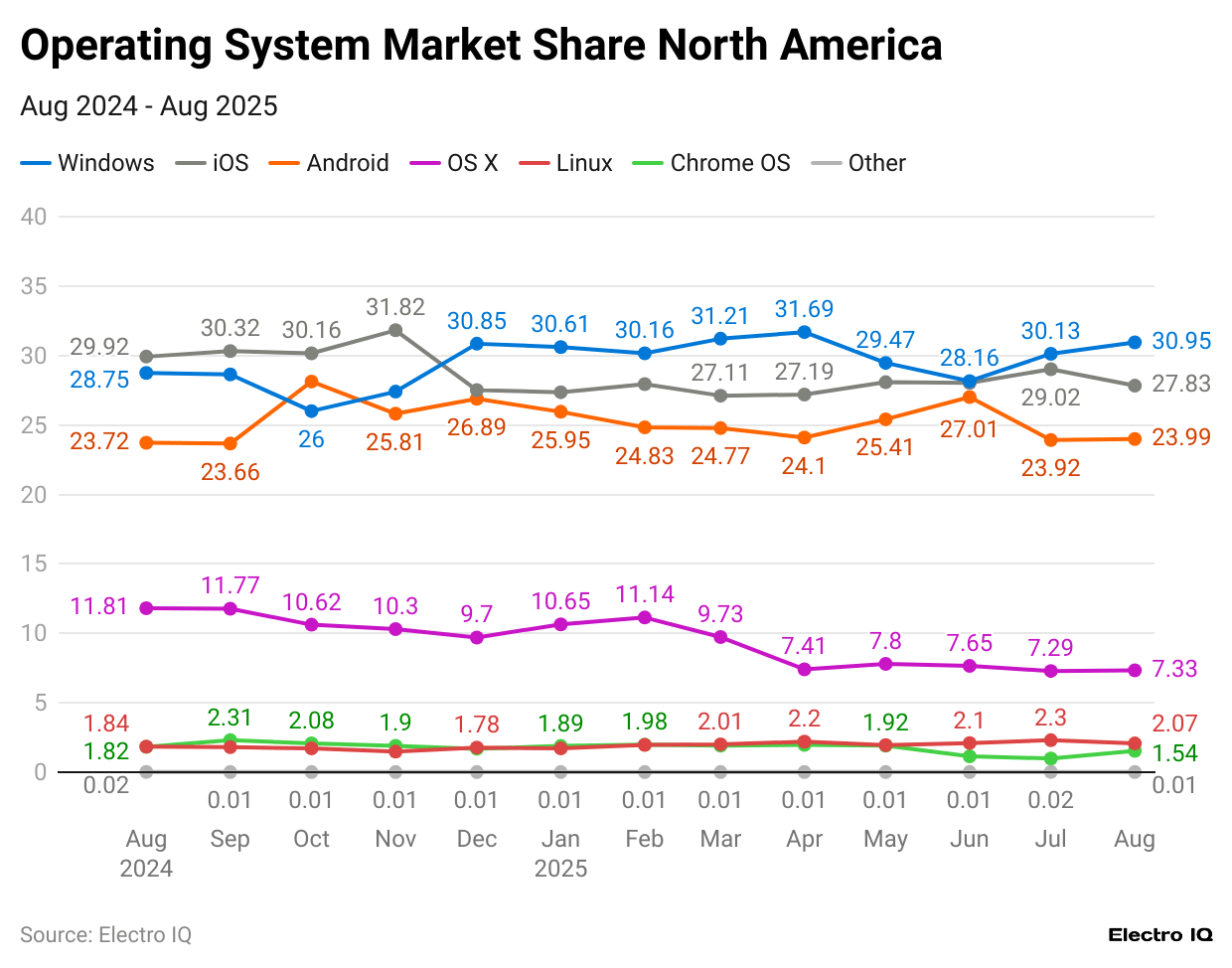
- Windows leads with 31.02%, followed closely by iOS at 27.77% and Android at 23.97%.
South America
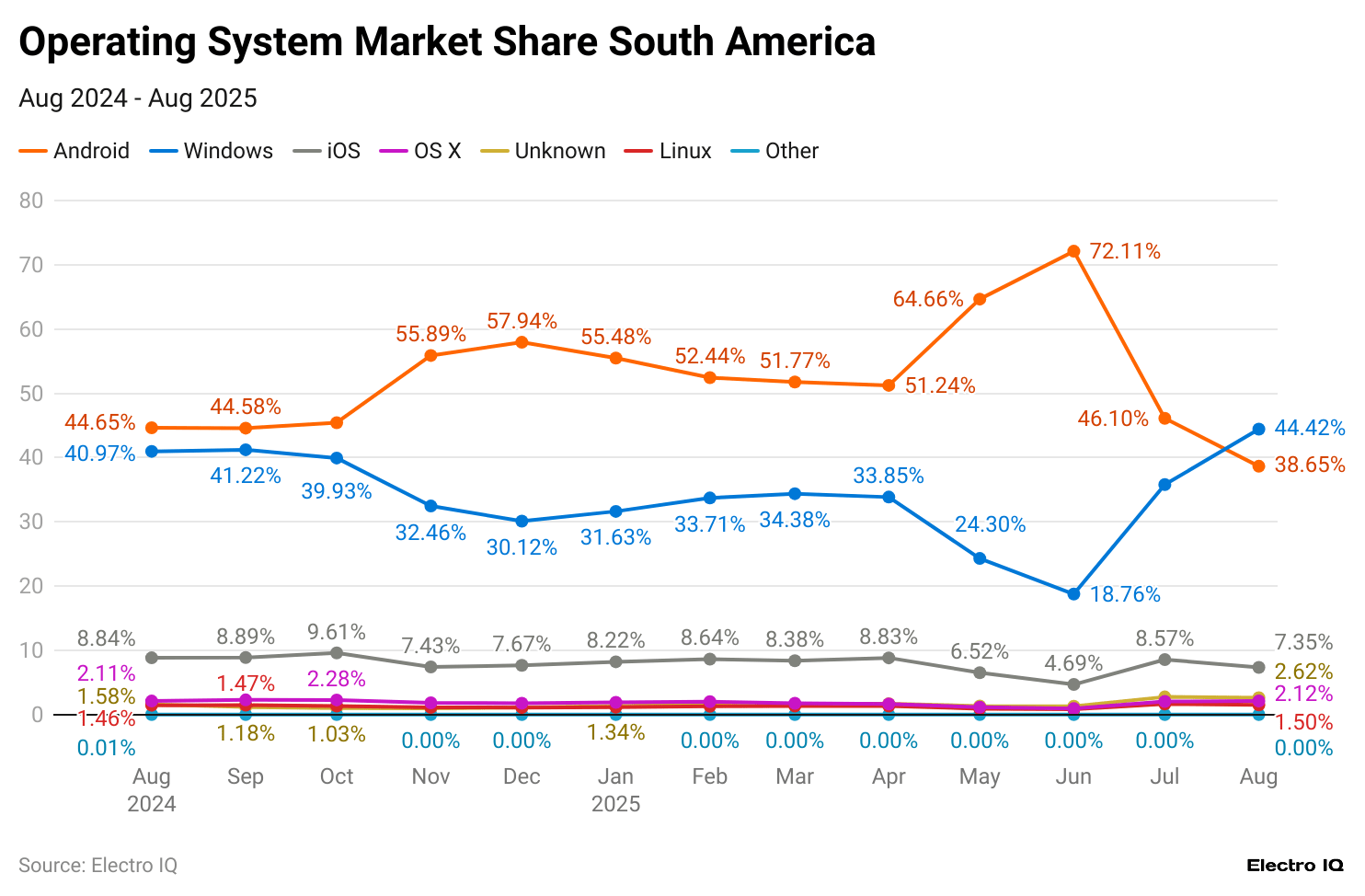
- Windows stands strong at 43.99%, while Android follows with 38.94%, reflecting a significant user base in mobile.
Africa
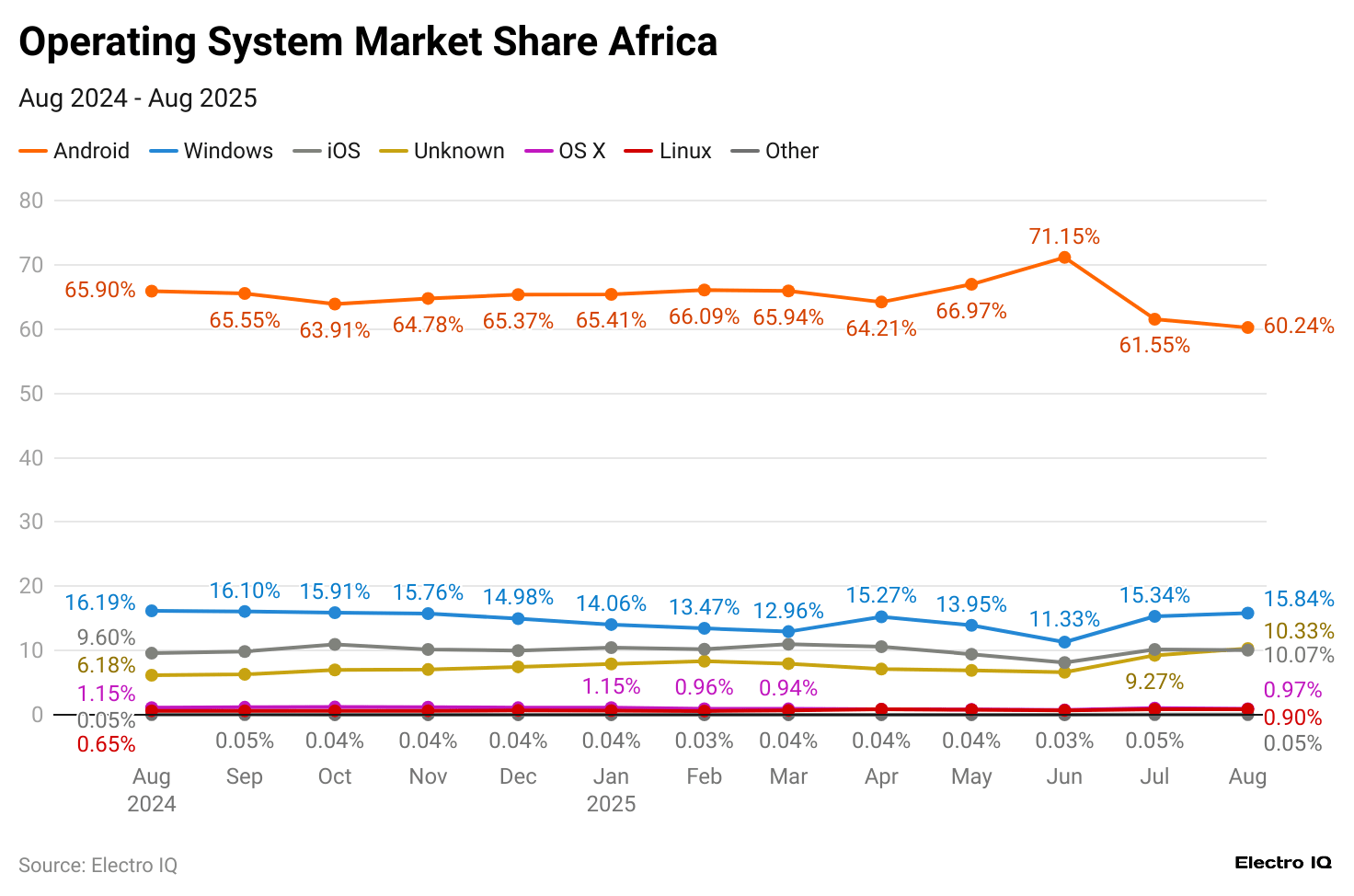
- Android dominates with 60.23%, leaving Windows with a smaller slice of 15.85%.
Asia
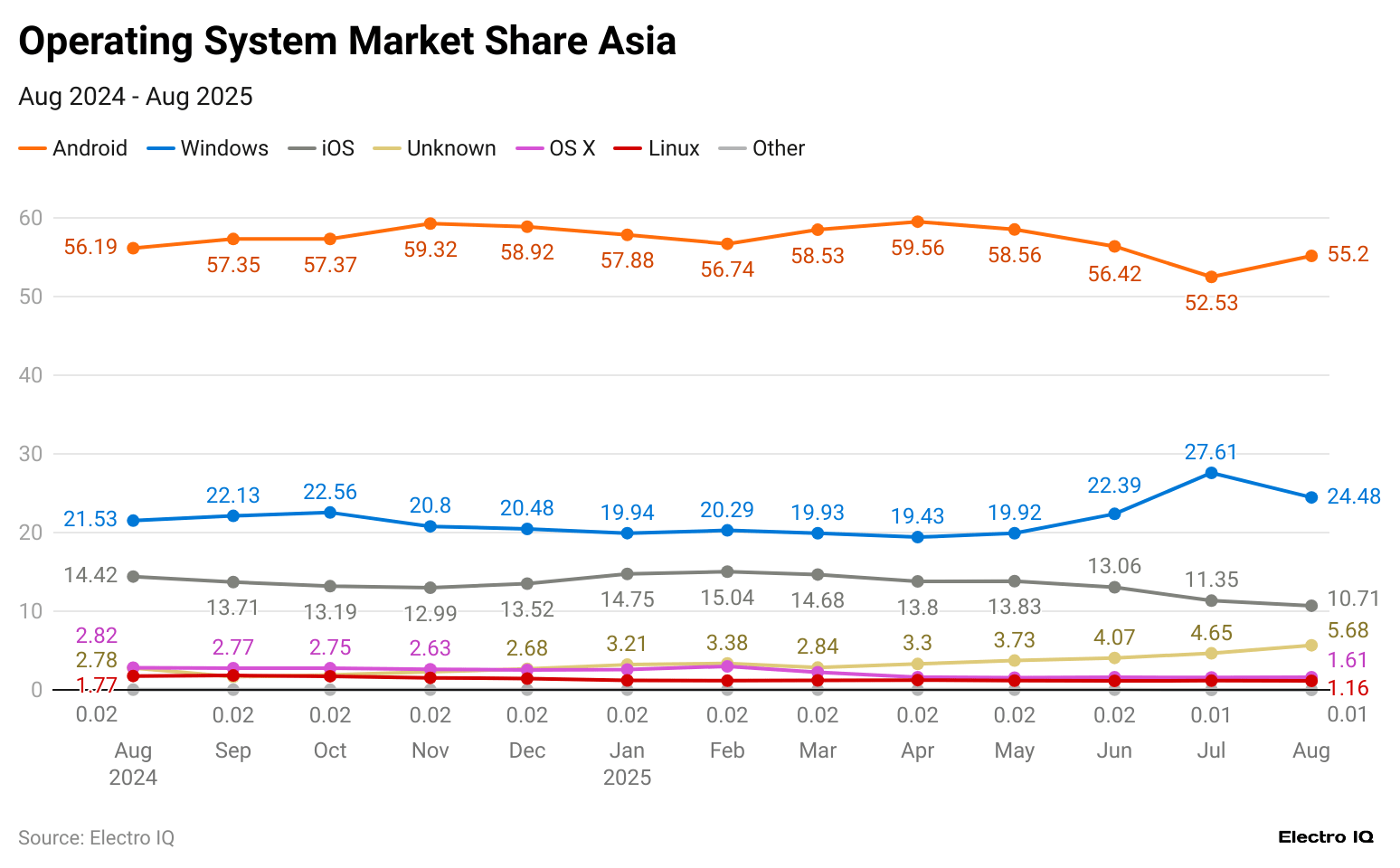
- Android achieves 55.1%, with Windows and iOS lagging at 24.56% and 10.72%, respectively.
Europe
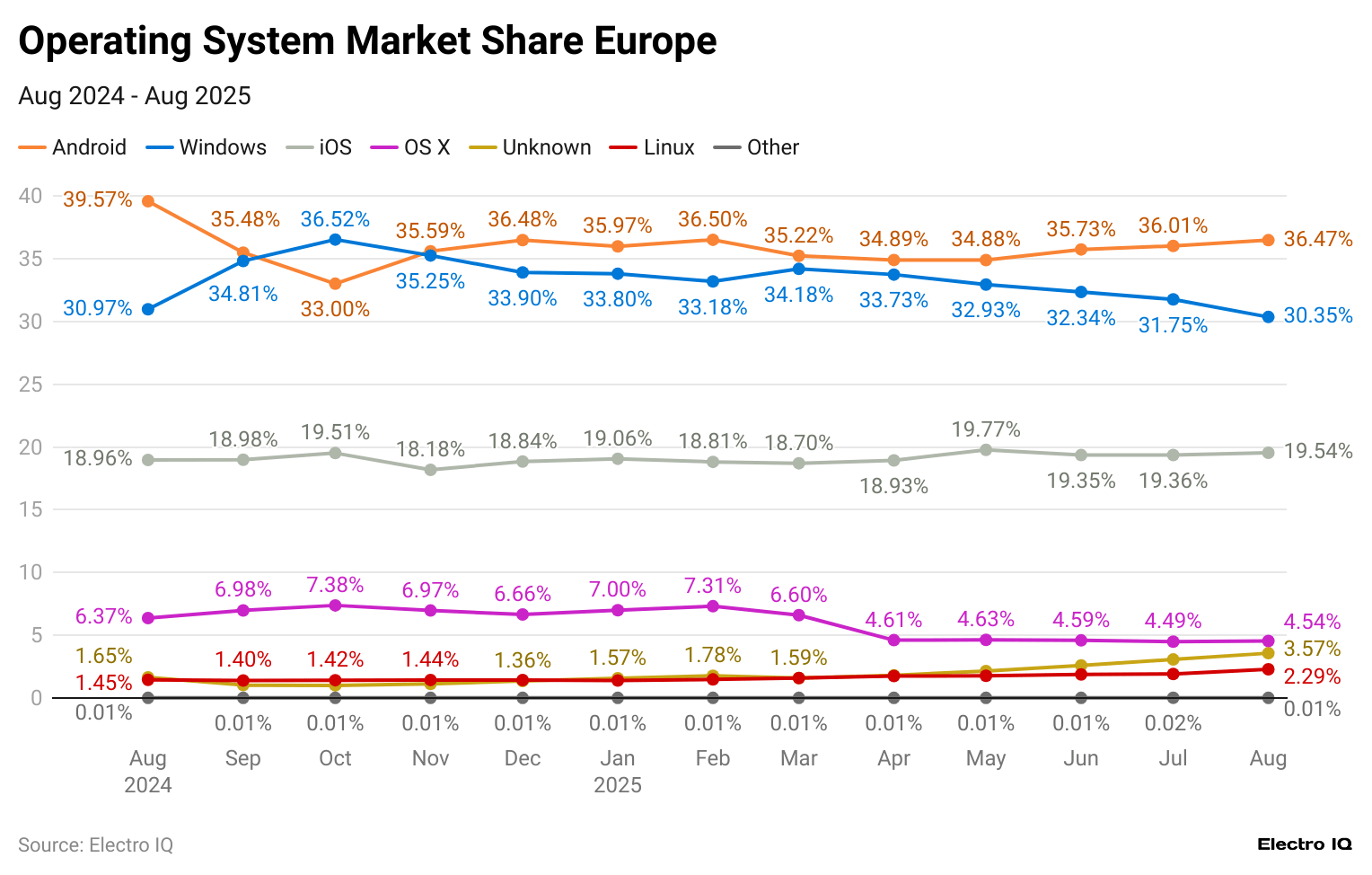
- Android once again leads at 36.43%, with Windows at 30.47%.
Oceania
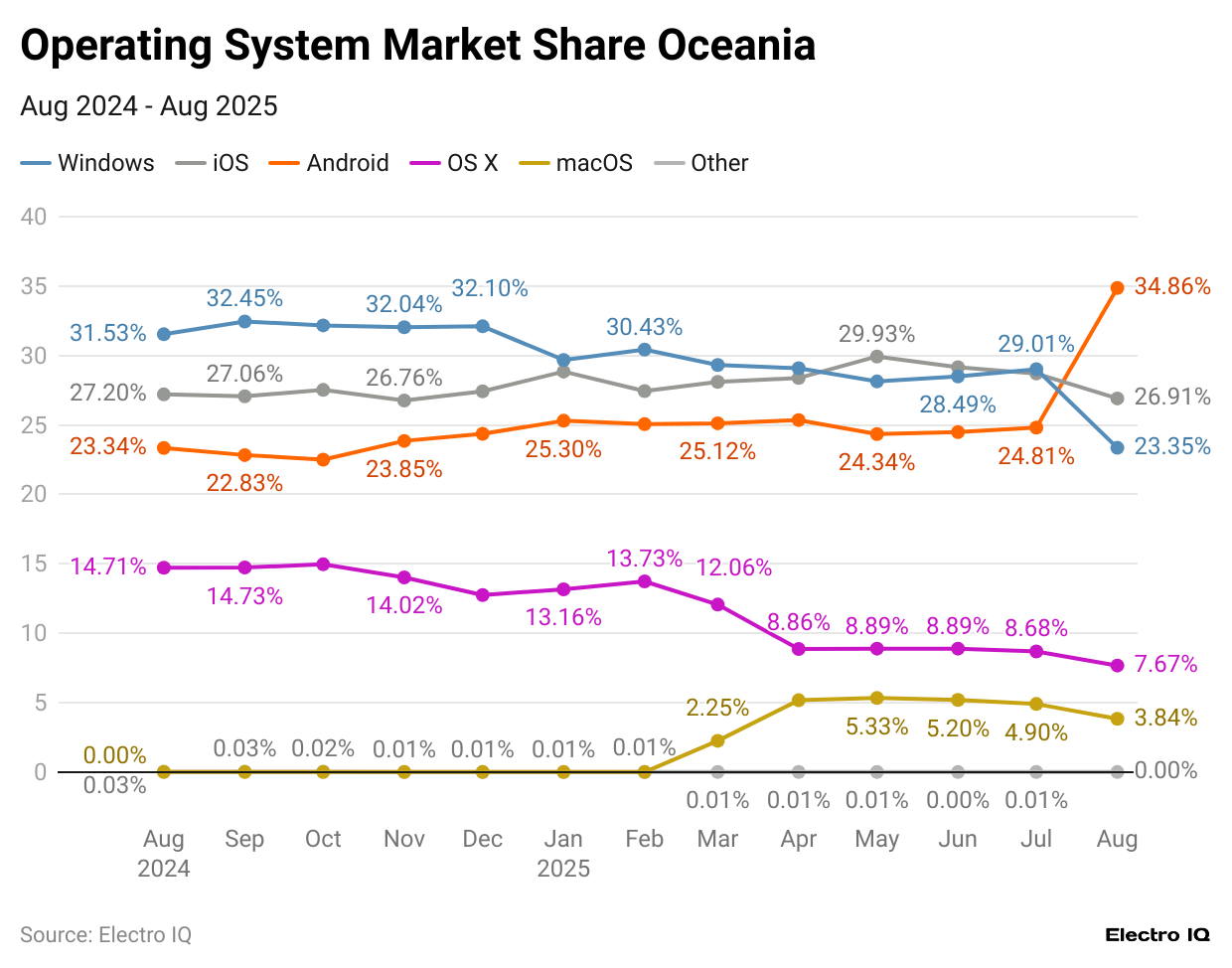
- Android holds 35.01%, while iOS accounts for 26.89%.
Smartphone Shipments by Operating System (2017 to 2025)
According to industry forecasts, Android’s grip on the smartphone market is robust, capturing 76% of units sold in Q1 2025, while iOS held 19% and HarmonyOS made a modest entry with 5%. The consistent pattern reflects Android’s accessibility and adaptability across various devices.
Operating System Share Analyses by Steam Hardware and Software
Recently, Microsoft Windows continues its reign but with slow declines, dropping from 96.40% in December 2023 to 95.23% by July 2025. macOS trends remain stable, while Linux shows gradual growth.
Windows Operating System Version Comparison Statistics
Most machines are dominated by Windows 10 (53.19%) and Windows 11 (43.22%), revealing users’ preference for security and features these versions provide.
Distribution of Developer Operating Systems Statistics
In 2024, Windows remains the favored OS for developers, used by 59.2% of respondents, signaling its essential role in software development.
Operating systems continue to play a pivotal role in shaping user experiences across various platforms, reflecting changes in consumer preferences, technological advancements, and regional differences. As we navigate through 2025, these statistics not only provide insight into the current landscape but also hint at future trends impacting the technology domain.