
Understanding the California Consumer Privacy Act (CCPA)
What is the California Consumer Privacy Act (CCPA)?
The California Consumer Privacy Act (CCPA) is a groundbreaking piece of legislation designed to empower individuals with greater control over their personal information. Enacted on June 28, 2018, and effective from January 1, 2020, the CCPA mandates that businesses operating within California establish mechanisms for consumers to opt out of data collection, request access, and delete information they have gathered. This law has been pivotal in shaping data privacy policies not only across California but also across the United States.
The CCPA was significantly amended by the California Privacy Rights Act (CPRA), which further expanded consumer rights and business obligations. This updated framework went into effect on January 1, 2023, with additional provisions, such as the requirement for data broker registries, set to start in early 2024.
Consumer Rights Under the CCPA
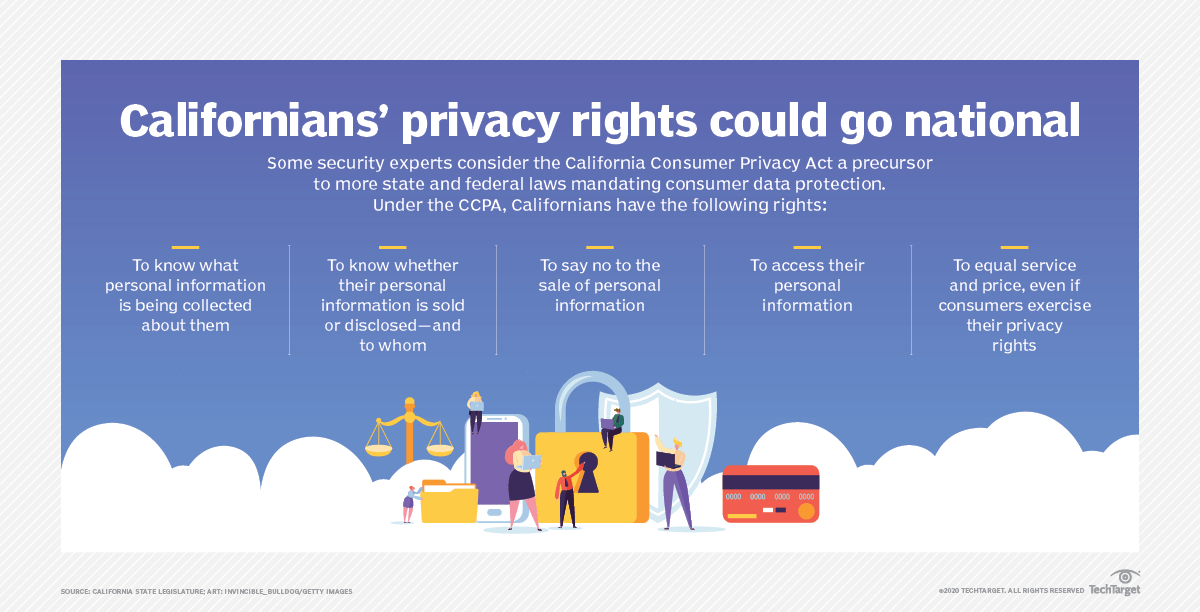
The CCPA is designed to grant California residents the following rights, often summarized by the acronym LOCKED:
- Limit Usage: Consumers can restrict how their information is used, ensuring that companies utilize their data only for specific purposes, like delivering services.
- Opt Out: Consumers have the explicit right to opt out of the sale or sharing of their personal information. Companies must honor these requests unless the consumer later agrees to allow sharing.
- Correct Information: Individuals can request corrections for any inaccurate data held about them.
- Knowledge: Consumers can inquire about the data a company has on them, including the categories of information collected, the purposes for which it’s used, and which third parties it is shared with. They are entitled to make such requests up to twice a year.
- Equal Treatment: Exercising any of these rights cannot lead to discrimination or differential pricing.
- Delete Data: Consumers possess the right to request the deletion of their personal information.
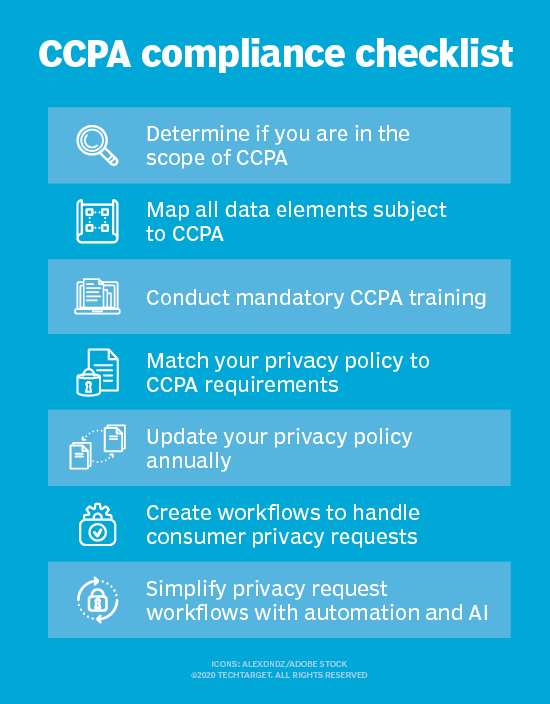
Companies must clearly articulate these rights in their privacy policies so that consumers understand how to exercise them.
Companies Subject to the CCPA
The CCPA applies primarily to for-profit businesses operating in California that meet certain criteria: they must have a gross annual revenue exceeding $25 million, or they must buy, sell, or derive over half their revenue from the sale of personal information pertaining to 100,000 or more California residents.
Responsibilities of Companies Under the CCPA
Businesses that fall under the CCPA’s purview have various responsibilities, designed to promote transparency and consumer trust:
- Disclosure of Practices: Companies must openly disclose how they collect and share consumer data through clear privacy policies.
- Opt-Out Mechanism: They must provide a straightforward opt-out process for consumers who wish to restrict data sharing.
- Identity Verification: Businesses are required to verify the identity of consumers who request access to or the deletion of their data.
- Response Requirement: Companies must respond to access and deletion requests promptly.
- Record Keeping: They ought to keep a log of consumer data requests for at least 24 months.
Protected Information Under the CCPA
The CCPA categorizes protected information into personal and sensitive personal data. Personal information encompasses any data that can be linked to an individual or household, including:
- Names
- Email addresses
- Purchase records
- Browsing histories
- Geolocation data
- Inferred preferences from the above
Sensitive personal information includes more sensitive classifications such as:
- Social security numbers
- Login credentials
- Financial records
- Precise geolocation information
- Communication content (email, texts, etc.)
- Biometric data
- Genetic and health information
- Religious or philosophical beliefs, union membership
Exceptions to the CCPA
The CCPA does not extend its protections to non-profit organizations or governmental entities. Additionally, certain data may be retained even in the event of a deletion request, including:
- Data needed to complete transactions like warranties or recalls.
- Information essential for providing services.
- Legally mandated record-keeping.
- Publicly available data.
- Data classified as consumer credit information.
- Information necessary for security or debugging purposes.
Penalties Under the CCPA
Businesses violating the CCPA face significant penalties. If a business is found in breach, they first receive a formal notification. They must resolve the violation within 30 days; failure to do so may result in fines. The penalties can amount to $2,500 for unintentional violations and $7,500 for intentional breaches. Moreover, consumers who suffer unauthorized access or breaches may seek damages ranging from $100 to $750, or the actual damages incurred.
One notable case involved a settlement with Google, which agreed to pay $93 million after it was found to have retained and misused consumer location data despite user opt-outs.
Comparing CCPA with General Data Protection Regulation (GDPR)
Both the CCPA and the General Data Protection Regulation (GDPR) aim to safeguard consumer privacy, yet they come with distinct nuances. Here are some key contrasts:
- Scope: The CCPA safeguards households, while the GDPR focuses solely on individuals.
- Business Applicability: The GDPR encompasses all businesses with over 250 employees, whereas the CCPA focuses on profitability thresholds.
- Consent: Under the GDPR, explicit consent is essential for data collection, while the CCPA permits an opt-out system.
- Sanctions: The GDPR can impose hefty fines for breaches—up to 20 million euros or 4% of a company’s global revenue—compared to the CCPA’s comparatively lower fines.
Navigating the complex landscape of data privacy rights can be challenging, but the CCPA is a monumental step towards protecting consumer data in an increasingly digital world.