
Imagine a robot that can seamlessly transition from swimming gracefully through water like a diving bird to soaring through the sky just as effortlessly. This isn’t the plot of a sci-fi movie; it’s a remarkable achievement by researchers at MIT and the École Polytechnique Fédérale de Lausanne (EPFL). Their innovative design utilizes a single set of wings that do not require propellers, legs, or even the complex folds associated with switching modes. This bird-scale robot, weighing in at 250 grams (8.8 oz), is the first of its kind capable of performing a full cycle of swimming, diving, launching, and flying using solely flapping motion.
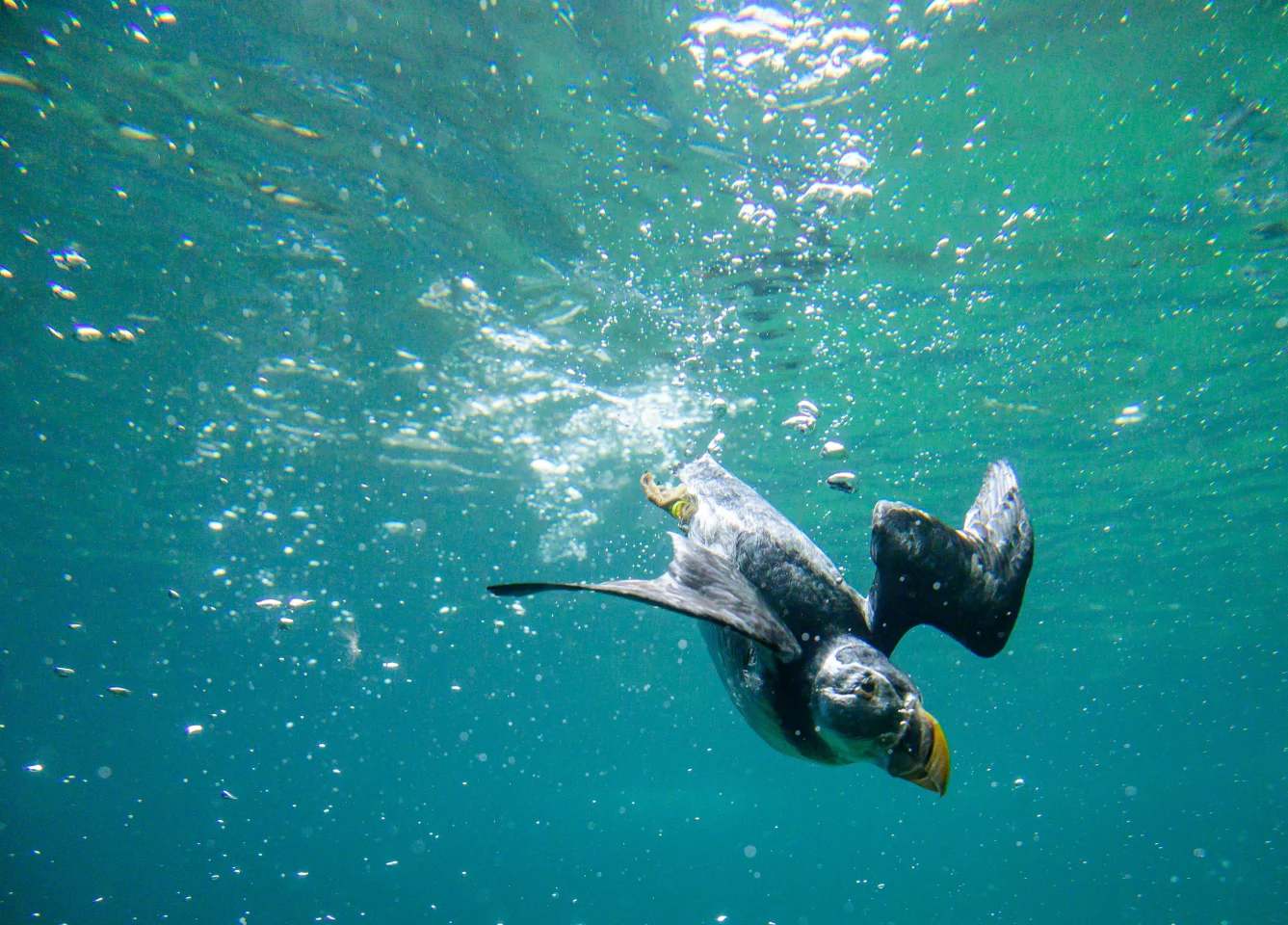
The inspiration for this remarkable creation stems from nature itself. Approximately 100 bird species are known to glide effortlessly between water and air—diving in to catch prey and leaping back into flight. However, designing a mechanical version that can handle such a drastic change in density is no small feat. Given that water is roughly 800 times denser than air, few designs can manage this shift without needing to swap out hardware. The engineers at MIT and EPFL have cracked this complex puzzle, positioning their robot at the intersection of biomimicry and cutting-edge robotics.
The success of this ingenious robot can be attributed to a pair of pivotal design choices: flexible wings and finely-tuned flapping speeds. When submerged, the robot’s wings can bend up to 90%, reducing strain on the motors and enhancing their effective sweep per flap. In the air, these wings are capable of flapping up to 11 Hz, while their underwater frequency drops to a manageable 0.1 to 6 Hz. Such adaptability is vital for navigating the diverse environmental challenges that come with switching between swimming and flying.
Puffin-Inspired Robot that Swims and Flies
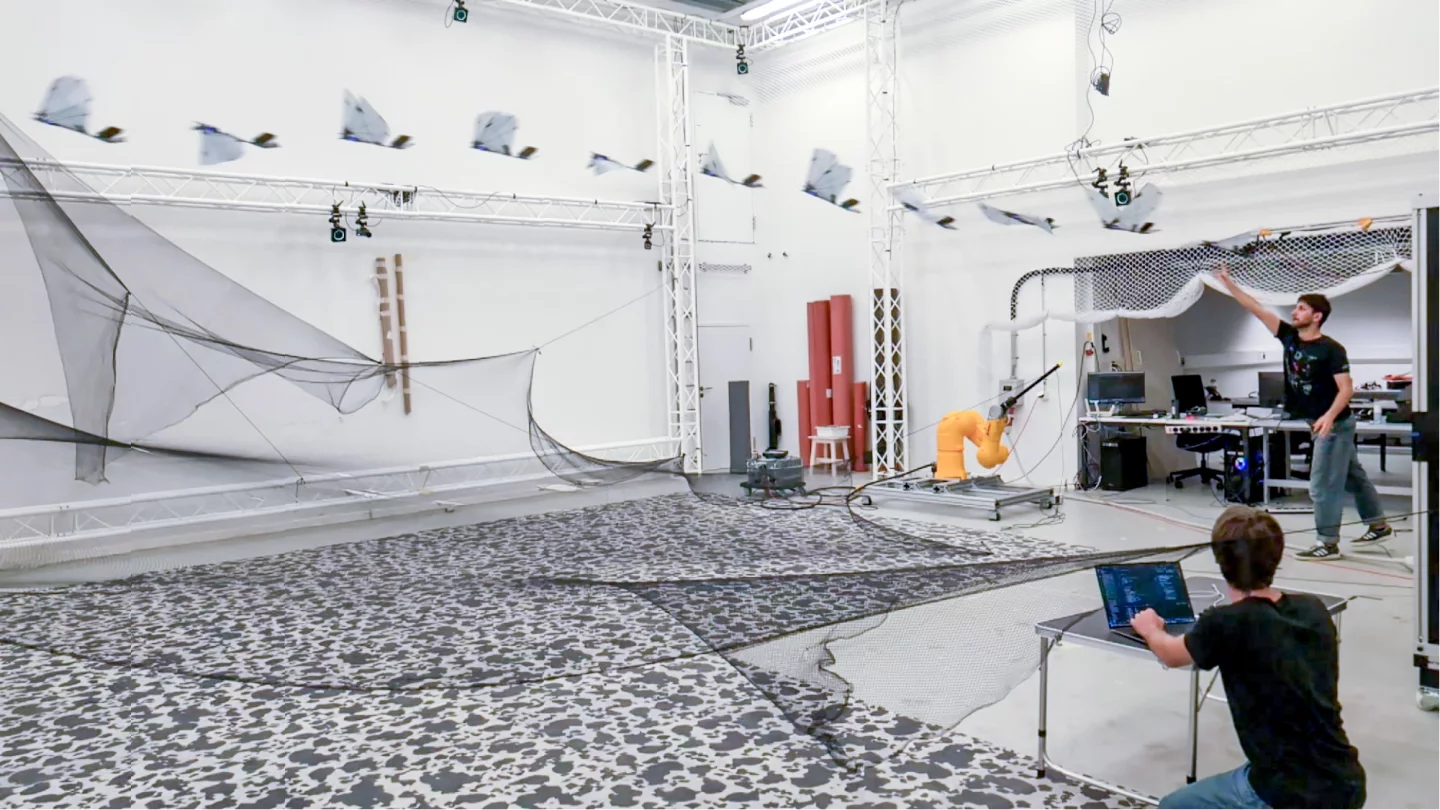
Neutrally buoyant, this robot doesn’t waste energy fighting against forces that would naturally draw it up or down. Energy conservation is crucial, particularly when the robot has limited battery power. However, while swimming and flying may sound straightforward, the real engineering challenge lies in the brief moment between the two activities—launching itself out of the water using nothing but its wings. This “leap of faith” requires precise conditions to be met.
With only 8 to 10 wingbeats required to propel itself out of the water within the span of a second, various specific factors must align for success. The wings must possess an intermediate stiffness—not too rigid or too flexible. The robot’s tail must remain close to the body, and the angle of ascent should ideally hover around 70 degrees. Too flat an angle results in the tail dragging it back down, whereas too steep will cause it to tip over and plunge back into the water.
Raphael Zufferey – MIT
This robotic marvel not only serves as a technological achievement but also acts as a sophisticated model for studying real diving birds. Researchers speculate that the observed phenomenon of birds reducing their wingspan when submerged may be more about achieving speed rather than merely conserving energy—an idea that’s challenging to investigate with live subjects but can be effectively explored with this robotic prototype.
The dynamics of the flapping robot have also revealed intriguing parallels with actual birds, as both systems appear to operate within a similar range of aerodynamic efficiency characterized by the Strouhal number, falling between 0.2 and 0.4. This alludes to the fundamental physics governing movement through both air and water, providing insights into evolutionary reasoning and design.
Interestingly, the robot’s operational design indicates that for distances exceeding roughly 15.5 meters (51 feet), flying expends less energy than swimming. This discovery aligns with intuitive human behavior, as people prefer to walk around a lake rather than wade through deep water.
Raphael Zufferey – MIT
As of now, the robot is not fully autonomous; testing has predominantly relied on manual launches alongside simple timers or trigger-based activation for its swimming and flying sequences. The research team’s next milestones include achieving autonomous navigation, enhancing performance in saltwater conditions, and extending the robot’s range and endurance.
If successful, this multifaceted robot could revolutionize approaches to environmental monitoring. Envision launching it from a boat or shoreline to survey areas of interest—be it an iceberg, a coastal facility, or a group of marine animals. After extracting or measuring relevant data, the robot can return and deliver the information, all while doing so at a fraction of the cost of traditional methods.
At an estimated cost of US$300 in materials, the robo-bird is economically feasible and replicable. The research team has generously made open CAD files available, allowing anyone with access to a 3D printer the ability to build one themselves.
As Raphael Zufferey, assistant professor of mechanical engineering at MIT, envisions, “Our dream vision is for oceanographers, marine biologists, and members of coastal communities to launch this robot from a boat, or from shore. It would fly close to the area of interest…and dive into the water to take a measurement or collect a sample, flying back to deliver the data at a fraction of the cost of traditional methods.”
The research findings are published in the journal Science. Sources include MIT News and EPFL.