
Navigating the Landscape of PaaS and Containers
Organizations today face a perennial challenge: how to effectively deploy and manage applications in an ever-evolving technological landscape. As computing has evolved, so too have the choices available for developers and business leaders. Among these choices, Platform as a Service (PaaS) and containers have emerged as two compelling alternatives. While they are fundamentally different, an intriguing interplay between them is developing, making it crucial to understand their distinct characteristics and use cases.
What’s the Difference Between PaaS and Containers?
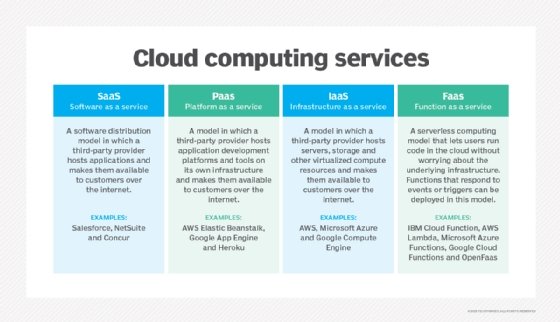
At its core, PaaS is a cloud-based suite of tools that empowers organizations to manage software development tasks. This often encompasses coding, testing, packaging, and deploying applications. A significant benefit of PaaS is that the provider handles the deployment and management of the necessary software tools, enabling businesses to offload the complexities of local infrastructure and support. This simplification can significantly streamline an organization’s IT environment.
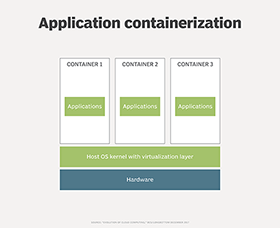
On the other hand, a container is a lightweight, virtualized environment that allows organizations to run applications in modular components. Sharing a common operating system, containers enable rapid spin-up, launching, and stopping of applications. This makes them particularly useful for managing scalable enterprise workloads.
Though PaaS and containers may initially seem unrelated, the reality is more nuanced.
How Are PaaS and Containers Used Today?
Digging deeper reveals that containers often serve as the backbone for PaaS environments. When using PaaS, developers deploy various applications—such as web apps or custom services—that require infrastructure to provision and configure computing and storage resources. Without human IT staff to manage these demands, PaaS providers rely on efficient automation to streamline deployment processes, frequently utilizing containers as the deployment mechanism for PaaS applications.
Furthermore, organizations also leverage containers outside the realm of PaaS. In local data centers, containers provide similar benefits, allowing for the easy deployment and management of applications. Local containers depend on established services like Docker or Apache Mesos and often use orchestration engines such as Kubernetes for automation.
What is Containers as a Service (CaaS)?
While PaaS encompasses various deployment mechanisms for applications, Containers as a Service (CaaS) focuses specifically on the deployment and management of containerized software. In a CaaS model, providers handle automated deployment, hosting, and monitoring of containers. The CaaS environment can be more sophisticated than basic PaaS offerings, making it well-suited for complex applications, such as microservices, where multiple containers encapsulate different dependencies and operating systems.
CaaS can thus be seen as a specialized subset within the broader PaaS ecosystem. For organizations primarily needing to deploy large numbers of containers, CaaS may present a more fitting alternative while still capitalizing on the benefits that PaaS offers.
Pros and Cons of PaaS
The benefits of PaaS are appealing to many organizations looking to streamline their application development processes:
- Time Savings: Businesses can start utilizing a PaaS platform within minutes.
- Cost Savings: PaaS eliminates the need for additional hardware and software investments.
- Accelerated Time to Market: Reducing overhead leads to quicker deployments, adding value to the organization.
- Flexibility: PaaS offerings can often be customized to suit specific business requirements.
- Scalability: PaaS solutions can grow alongside business needs.
- Managed Services: PaaS providers oversee the underlying infrastructure, allowing organizations to focus on development.
However, PaaS is not without challenges:
- Vendor Roadmap: Organizations may find themselves limited by the capabilities and services provided by their PaaS vendor.
- Vendor Lock-In: Migrating to another provider can be complex, leading to dependency on a single vendor.
- Compatibility Issues: Some PaaS solutions may not integrate well with existing tools and platforms.
Pros and Cons of Containers
Containers bring their own array of advantages and disadvantages for organizations and developers:
- Speed and Scalability: Containers can be deployed and terminated rapidly, enabling organizations to adapt quickly.
- Consistency: Container images encapsulate all necessary components, permitting operation across diverse environments without issues.
- Automation: The sheer volume of deployments necessitates effective management solutions, often facilitated by orchestration tools like Kubernetes.
Nevertheless, containers come with their challenges:
- Container Complexity: The combination of application code and dependencies within container images can make management cumbersome.
- Operational Complexity: Managing thousands of containers can be a daunting task, necessitating robust monitoring and oversight.
- Security Concerns: Sharing a common OS can pose risks; any vulnerability can affect all containers on that OS.
How to Choose Between PaaS and Containers
Choosing between PaaS and containers often isn’t an explicit decision since containers frequently serve as deployment mechanisms for many PaaS solutions. For organizations prioritizing speed and convenience, a PaaS that utilizes containers might be the ideal choice.
On the other hand, if an organization values control and oversight, it might opt to build a local container infrastructure. This approach is more complex and resource-intensive, requiring significant expertise in container technologies.
Containers as a Service (CaaS) emerges as another option, allowing organizations to leverage the advantages of PaaS while focusing specifically on container-based deployments.
The Future of PaaS and Containers
The convergence between PaaS, containers, and cloud environments will likely deepen in the coming years. Several trends are already observable:
- PaaS offerings are predominantly cloud-based.
- Containers enable rapid deployment for modern applications.
- Many PaaS solutions integrate containers as a core element.
- Public clouds are tailored for efficient container management.
As the technological landscape evolves, the lines separating these methodologies may blur, making it increasingly important for organizations to evaluate their needs, budget constraints, and operational capabilities when considering their deployment options. The emphasis will continue to shift toward shedding infrastructural complexities in favor of focusing on core business functions.