
Revolutionizing Soft Robotics with the LIMA Pump
The Cardiovascular Challenge of Soft Robotics
Soft robotics is an exciting field that blends flexibility and functionality, allowing robots to move and deform much like living organisms. However, these marvels of engineering face a notable hurdle: their internal "hearts"—the pumps responsible for moving fluid through their soft structures—have generally been bulky and rigid. This has limited the range and adaptability of soft robots significantly, often rendering them tethered to cumbersome stationary equipment via tubes and cables.
The Breakthrough: A Soft Miniature Pump
Researchers at the University of Bristol have taken a monumental leap forward by developing the Liquid Metal Magnetohydrodynamic Actuator (LIMA) pump. This miniature pump, weighing roughly the same as a dried pumpkin seed (just 0.2 grams), is capable of generating enough hydraulic pressure to power soft robotic systems without the bulkiness associated with conventional compressors or rigid mechanical pumps.
Unlocking the Potential: Magnetohydrodynamics
Traditional soft robotic systems often rely on hydraulic or pneumatic components that can be excessively large and heavy. The LIMA pump, on the other hand, operates on the principle of magnetohydrodynamics, which explores how magnetic fields interact with electrically conductive fluids.
Within the pump, a tiny droplet of liquid metal is suspended in a fluid-filled channel, positioned above a neodymium magnet. When an electric current passes through the liquid metal, the interaction with the magnetic field creates a Lorentz force that causes the droplet to oscillate, generating pressure differences that propel fluid through the robotic system. This innovative design eliminates the need for rigid components, allowing for a more seamless integration into soft robotic platforms.
Advantages of Liquid Metals
Liquid metals epitomize several unique properties that make LIMA a game-changer in soft robotics. These metals possess exceptionally high electrical conductivity, enabling them to operate efficiently at incredibly low voltage levels—less than 0.1 volts. This advantage dramatically reduces the energy requirements, making the pump compatible with compact batteries and even wearable electronics.
Moreover, liquid metals exhibit high surface tension, keeping the droplet intact during operation. This integrity means no mixing with the surrounding fluid, ensuring longevity without the wear and tear seen in traditional pumps. Their fluid design also allows them to move effortlessly within soft structures, minimizing frictional losses.
Beyond Simple Functionality
The potential applications of the LIMA pump extend far beyond moving fluids. Researchers envision it serving multiple roles within a soft robotic network: transporting hydraulic power, delivering chemical substances like medications, and transmitting signals through fluid pathways. This multifunctionality provides a robust alternative to bulky compressor replacements and could redefine how we think about robotic systems.
Prototypes Demonstrating LIMA’s Capabilities
To illustrate the pump’s versatility and potential, the University of Bristol team integrated the LIMA pump into three distinct prototypes:
-
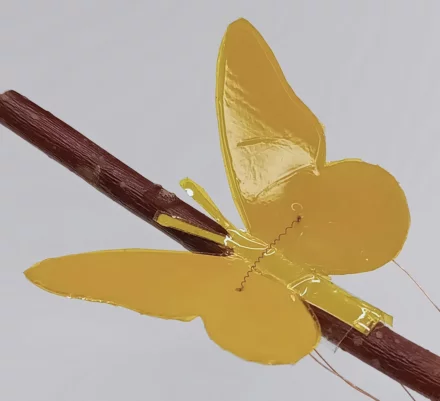
Robotic Butterfly: One prototype takes the form of a robotic butterfly, where its wings flap thanks to fluid-powered actuation from the LIMA pump. This demonstrates the device’s capability to produce mechanical motion effectively despite its minuscule size.
-
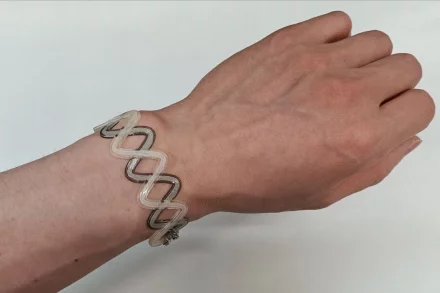
Color-Changing Bracelet: The second prototype is a wearable bracelet that changes color by circulating fluid through adaptive materials. This innovation hints at future applications in smart clothing and responsive displays that can alter their appearance based on user demands.
- Haptic Interface: The last prototype is a sophisticated haptic interface featuring a soft fingertip pouch connected to a wristband. By managing the flow of fluid, the device can create realistic touch sensations, opening avenues for virtual reality applications, teleoperation, and rehabilitation technologies.
The Future of Soft Robotics
These prototypes are merely a glimpse into the expansive potential of soft robotics powered by the LIMA pump. As researchers continue to explore its functionalities, applications could grow to include medical implants, innovative assistive devices, adaptive textiles, and even edible robots—all benefiting from a compact, efficient, and versatile form of fluid power.
This pioneering development in soft robotics heralds a new era where robots are no longer hampered by heavy, rigid systems, giving rise to a future where they can be portable, adaptable, and seamlessly integrated into various applications.
For more insights into this groundbreaking research, you can check out the study published in the journal Nature Communications.
To learn more from the University of Bristol, click here.